
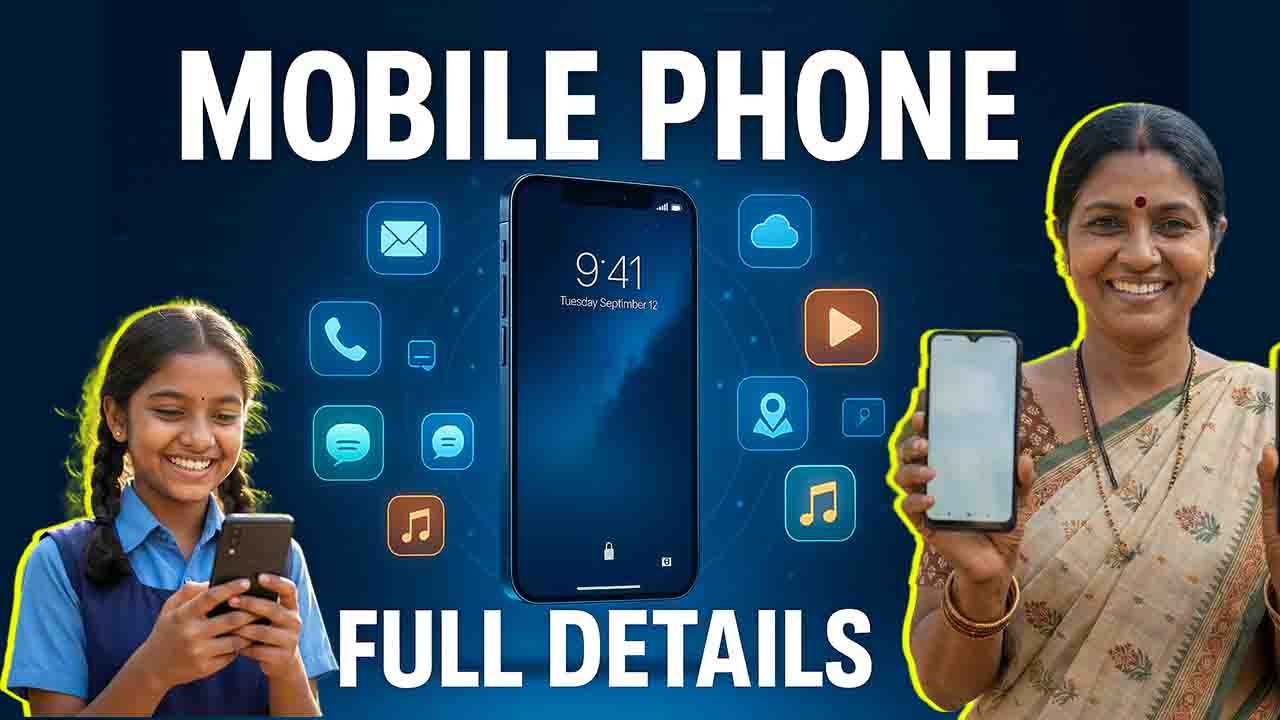
A mobile phone has become more than just a calling device. It is a camera, a computer, a shopping tool, a learning partner, a bank, an entertainment center, and sometimes even a personal assistant. In today’s fast-moving world, it is almost impossible to imagine daily life without a phone in our hand or pocket. From children to senior citizens, students to business owners, everyone depends on a mobile phone for something important.
This article explains the history, uses, advantages, disadvantages, buying tips, future trends, and the impact of mobile phones on our lives. Written in a natural, simple style, it helps readers understand why this small device has become such a powerful part of modern society.
The Evolution of Mobile Phones
When the first mobile phones came into the market, they were big, heavy, and expensive. Only a few people could afford them, and the main purpose was to make voice calls.
Over the years, technology improved rapidly. Phones became smaller, lighter, and faster. Keypads were replaced by touchscreens, and simple displays turned into high-resolution screens.
The arrival of smartphones changed everything. With internet connectivity, mobile apps, high-quality cameras, and powerful processors, mobile phones became mini-computers. Today, people use their phones for almost every task—from online classes and video meetings to mobile banking and digital payments.
Why Mobile Phones Have Become So Important
Instant Communication
Mobile phones enable fast communication through calls, messages, and video chats. Social media apps make interactions even easier.
Useful in Emergencies
A mobile phone helps you contact family, friends, and emergency services instantly. Location sharing adds extra safety.
Entertainment Anytime, Anywhere
Movies, music, games, and social media are always available in one device.
Online Learning and Study Support
Students access online classes, educational videos, and e-books easily with smartphones.
Digital Payments and Banking
UPI and mobile banking allow secure transactions without carrying cash.
Navigation and Travel Support
GPS helps users find routes, check traffic, and locate places easily.
How Mobile Phones Are Changing Our Daily Life
At Home
Phones help with online shopping, home management, and video calling.
In Education
Students record lectures, take photos of notes, and learn through online platforms.
In Business
Businesses use phones for accounts, social media marketing, and customer communication.
Health & Fitness
Fitness and telemedicine apps make health monitoring easier.
Advantages of Mobile Phones
✔ Convenience
✔ Connectivity
✔ Productivity
✔ Photography
✔ Multifunctional Use
Disadvantages of Mobile Phones
✘ Addiction and Overuse
✘ Social Disconnect
✘ Privacy Concerns
✘ Health Issues from screen time
✘ Reduced Physical Activity
How to Use Mobile Phones Wisely
Limit screen time
Avoid using phones while driving
Keep data private
Install apps only from trusted sources
Take breaks to protect eyes
Use password or biometric lock
Update software regularly
What to Look for When Buying a Mobile Phone
Processor
Choose a strong processor like Snapdragon, MediaTek, or Apple A-series.
RAM & Storage
More RAM and storage ensure better performance.
Camera Quality
Check megapixels, night mode, aperture, and video quality.
Battery Life
Prefer 4500–5000 mAh or higher with fast charging.
Display
AMOLED or high-resolution screens offer better visuals.
Operating System
Choose between Android and iOS based on preference.
Build Quality
Durability matters for long-term use.
5G Connectivity
For faster and smoother internet.
Types of Mobile Phones
Feature Phones
Basic calling and messaging phones with long battery life.
Smartphones
Internet-enabled phones with apps and advanced features.
Gaming Phones
Built for heavy gaming with strong processors and cooling.
Camera Phones
Designed for advanced photography.
Foldable Phones
Modern phones with flexible, foldable screens.
Future of Mobile Phones
AI-Powered Phones
Smarter phones that adapt to user behaviour.
Faster Networks
6G will bring ultra-fast internet speeds.
More Foldable & Rollable Phones
Flexible screens will become common.
Better Battery Technology
Long-lasting, fast-charging batteries will improve.
Improved Security
Better biometrics like advanced face recognition.
Impact of Mobile Phones on Society
Mobile phones have created new jobs, improved communication, simplified payments, and expanded online education. However, issues like fake news, cyberbullying, and screen addiction have also increased. A balanced digital life is important for healthy living.
Mobile phones are one of the greatest inventions of modern times. They influence how we work, learn, communicate, and entertain ourselves.
FAQs on Mobile Phones
1. What is a mobile phone and how does it work?
It connects to nearby mobile towers and allows calling, messaging, and internet access.
2. Why are mobile phones important today?
They simplify communication, banking, learning, and entertainment.
3. What features should I check before buying?
Processor, RAM, storage, camera, battery, display, OS, and 5G.
4. How can I increase battery life?
Reduce brightness, close background apps, use battery saver, avoid overcharging.
5. Are mobile phones harmful to health?
Only when overused. Taking breaks helps reduce risks.
6. Difference between smartphone and feature phone?
Feature phones are basic; smartphones offer advanced features.
7. How often should I update software?
Update whenever a new official update is available.
8. Is 5G necessary?
Useful if available in your area; otherwise, 4G is enough.
9. How can I secure my phone?
Use passwords, avoid unknown links, install trusted apps.
10. What is the average lifespan of a phone?
Typically 3–5 years with proper care.