
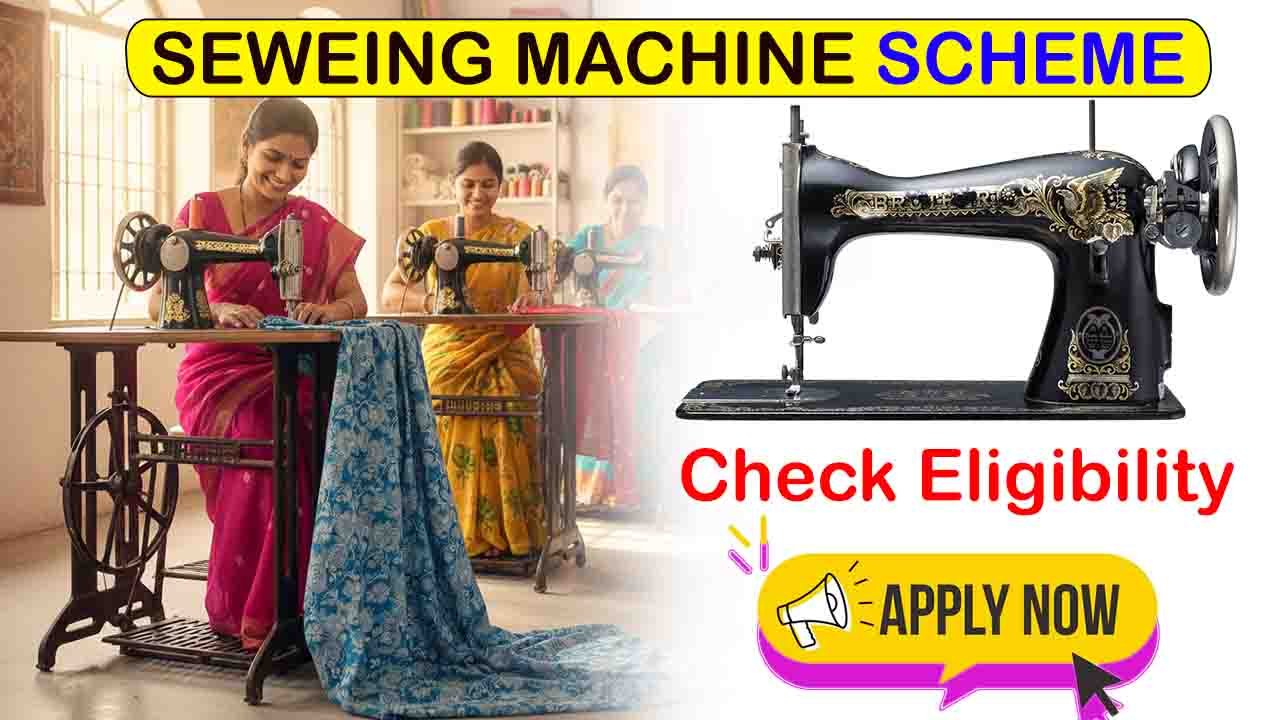
The Free Sewing Machine Scheme is one of the most impactful government initiatives aimed at empowering women across India. Through this program, eligible women receive a free sewing machine to support self-employment, strengthen financial independence, and encourage skill development. Several states and central ministries run similar schemes to promote livelihood opportunities for low-income families.
This article covers the benefits, eligibility, required documents, and step-by-step application process in a simple and SEO-friendly manner.
What Is the Free Sewing Machine Scheme?
The Free Sewing Machine Scheme is a government-supported program that provides sewing machines at no cost to eligible women, especially from economically weaker sections. The goal is to help women start their own tailoring business, contribute to household income, and reduce dependence on others for employment.
Many states such as Gujarat, Maharashtra, Haryana, Uttar Pradesh, and Tamil Nadu run their own versions of this scheme, while central government programs like Skill India, NRLM, and PMKVY support related training.
Key Highlights of the Scheme
- Objective: Promote self-employment among women
- Benefit: Free sewing machine or financial assistance for machine purchase
- Target Group: Low-income women, widows, disabled women, rural households
- Application Mode: Mostly online; some states allow offline forms
- Availability: Scheme varies by state government policies
Benefits of the Free Sewing Machine Scheme
Self-Employment Opportunity
Women can start stitching clothes from home and earn a regular income.
Support for Small Businesses
Tailoring is in high demand, making it a sustainable livelihood option.
Empowerment and Independence
The scheme helps women gain confidence and contribute financially.
Zero Cost
The machine is provided free of charge, reducing the burden on low-income families.
Skill Development
Training programs help women improve tailoring skills and expand their income potential.
Eligibility Criteria
Eligibility can vary by state, but generally, the applicant must:
- Be a woman aged 18–40 years
- Belong to a low-income family (BPL / EWS)
- Have basic knowledge of sewing
- Be a resident of the respective state
- Preferably a widow, disabled woman, or woman from rural areas
Some states may have additional conditions, such as annual income limits (e.g., ₹2 lakh or less).
Documents Required
To apply, the following documents are usually needed:
- Aadhaar Card
- Residence Proof
- Income Certificate
- Passport-size Photograph
- Age Proof
- Widow Certificate (if applicable)
- Disability Certificate (if applicable)
- Mobile Number
- Bank Account Details
How to Apply for the Free Sewing Machine Scheme
The process differs by state, but here is the general method:
Step 1: Visit the State Government Portal
Search for your state’s official website running the scheme (e.g., Women & Child Development, Social Welfare Department).
Step 2: Find the Scheme Application Section
Look for “Free Sewing Machine Scheme” or related livelihood programs.
Step 3: Fill Out the Application Form
Enter personal details, income information, and sewing experience.
Step 4: Upload the Required Documents
Make sure all documents are clear and valid.
Step 5: Submit the Application
After submission, you may get an application number for tracking.
Step 6: Verification and Distribution
Once approved, beneficiaries are notified about machine distribution camps or delivery.
State-Wise Availability of the Scheme
1. Gujarat Free Silai Machine Yojana
One of the most popular schemes offering free machines to over 50,000 women annually.
2. Haryana Free Sewing Machine Scheme
Supports rural women, widows, and low-income families.
3. Maharashtra Free Silai Machine Scheme
Provides machines along with training under Skill Development missions.
4. Uttar Pradesh Women Empowerment Sewing Scheme
Targets rural women and self-help group members.
5. Tamil Nadu Tailoring Machine Scheme
Offers free machines and provides stitching courses for skill growth.
Who Benefits the Most?
This scheme mainly supports:
- Homemakers
- Widows
- Women from rural and tribal areas
- Self-help group members
- Women looking to start home-based businesses
Impact of the Scheme
The Free Sewing Machine Scheme has improved the lives of thousands of women by:
- Reducing unemployment
- Encouraging entrepreneurship
- Supporting financial stability
- Increasing women’s participation in local markets
Tailoring is a skill that requires minimal investment and offers consistent earning opportunities, making this scheme highly effective.
Conclusion
The Free Sewing Machine Scheme is a powerful initiative that helps women achieve financial independence and develop long-term income skills. Whether you are a beginner or already know stitching, this scheme can open the door to a stable livelihood. Women who meet the eligibility criteria should take advantage of this opportunity by applying through their respective state government portals.
Top 5 FAQs on Free Sewing Machine Scheme
1. Who is eligible for the Free Sewing Machine Scheme?
Women aged 18 to 40 years from low-income or BPL families are generally eligible. Many states also give preference to widows, disabled women, and rural households.
2. Is the scheme available in all states of India?
No, the scheme is implemented state-wise, and availability varies. States like Gujarat, Haryana, Maharashtra, Uttar Pradesh, and Tamil Nadu actively run such programs.
3. What documents are required to apply?
Applicants typically need: Aadhaar card, income certificate, address proof, age proof, passport-size photo, and bank account details. Additional documents may be needed for widows or disabled applicants.
4. How can I apply for the Free Sewing Machine Scheme?
Applications are usually submitted through the state government portal, under departments like Women & Child Development or Social Welfare. Some states also allow offline applications through local authorities.
5. Do applicants have to pay any amount for the sewing machine?
No. The machine is provided completely free of cost to eligible women after verification by the government department handling the scheme.

Top Real Estate Companies in India: Leaders Shaping the Nation’s
The Indian real estate sector has grown rapidly over the last two decades, driven by urbanization, population growth, rising incomes,…
Free Electric Scooty Scheme for Girl Students in Telangana 2026
The Telangana government has introduced several welfare schemes to empower women and promote education. One of the most talked-about initiatives…
Importants of Question Paper for 10th, Intermediate & Degree Final
Preparing for final exams can feel stressful, especially when you are studying in 10th class, Intermediate, or Degree courses. The…

Top 10 Health Insurance Companies in India (2026) — Every
In 2026, staying healthy is a priority, but being prepared for medical emergencies is a necessity. With the cost of…

Vi Prepaid Plans: Real Talk Guide for Late 2025 (Heading
Staying connected in 2026 is gonna be even bigger with faster networks, more streaming, and online everything—from school stuff to…

Airtel Prepaid Plans in 2026: Straight Talk Guide for Everyone
Picking a recharge plan these days feels like grabbing your favorite snack— you want good value, enough to last, and…

A Simple Guide to Jio Recharge Plans for 2026 |
A Simple Guide to Jio Recharge Plans for 2026 Think about how much we rely on our phones these days. Whether…